
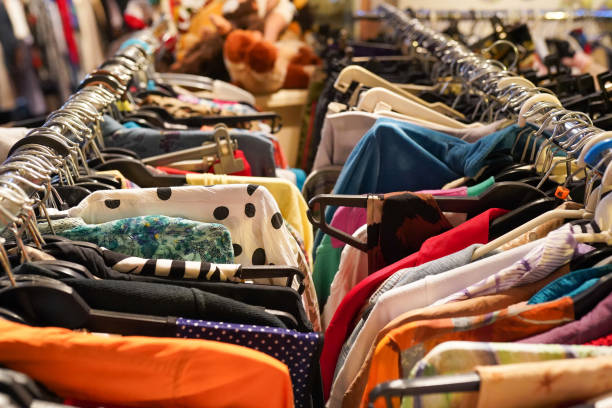
Secondhand fashion has seen a surprising and massive influx of popularity throughout the past decade, with the rise of “#Thrifttok” and influencers opening their own marketplaces filled with pieces from their closets on websites like Depop, secondhand fashion has undergone a renaissance. As of 2024, the secondhand fashion market is valued at $190 billion and is projected to expand to $521 billion by 2034, representing a 10.7% annual growth rate over the next decade, reflecting a rising consumer demand for secondhand clothing. But what is driving this demand for secondhand clothes? Is it the value of buying secondhand? That is one aspect of buying secondhand, yet fast fashion tycoons such as Uniqlo and H&M exist, providing inexpensive clothing to consumers, so there must be more to consumer habits than just value driving the secondhand fashion market. Secondhand fashion offers insight into consumers’ desires for individuality, sustainability, and community, which large retailers often fail to provide.
With secondhand apparel expected to account for up to 10% of the global apparel market by 2025, a clear shift in consumer preferences towards secondhand clothing is evident. Websites like Depop, Grailed, and Poshmark are each carving out their niche within this emerging market. In addition, established players like eBay, one of the first online auctioning platforms, are entering the fashion resale space through features such as authenticity checks on apparel and accessories.
Due to recent economic volatility, consumers are seeking more predictable expenses and making budget cuts in their spending. As of Q3 2024, 64% of consumers plan to reduce their unnecessary expenditures, seeking cost-effective approaches to their fashion purchases. This shift is leading consumers toward alternatives that even fast fashion can’t provide, given looming tariffs and sustainability concerns. These changes in consumer habits have fueled the secondhand market, with 41% of consumers looking to secondhand outlets for apparel deals, indicating a fundamental shift in shopping behavior.
A diverse ecosystem of platforms has met this demand, each launched during key innovation waves and attracting distinct user bases:
2011 marked the beginning with the launch of Poshmark and Depop as pioneers in the secondhand retail market. Poshmark has since grown to 80 million users, attracting an older, more affluent demographic. In comparison, Depop has cultivated 45 million registered users, with 90% of them under the age of 26.
2013 saw Grailed establish its premium menswear niche, building a community of 3.7 million users who are interested in streetwear and treat fashion as both a hobby and an investment.
2014 marked Mercari’s entry into the U.S. market, following its success in Japan, where it had accumulated 30 million downloads since launch and demonstrated broader category appeal beyond fashion.
Meanwhile, eBay has leveraged its existing infrastructure to capture the fashion resale opportunity, bringing its 134 million active buyers worldwide to the website, with a portion of that focus on the secondhand apparel space. The platform offers tools such as enhanced authentication services and category-specific search.
Each platform captures significant user bases, yet the raw numbers only tell part of the story. The fundamental insight lies in understanding the distinct consumer tribes that have gravitated toward each service.
These tribes represent more than simple demographic segments—they’re communities united by shared values, shopping behaviors, and cultural identities. Where traditional retail treats customers as uniform buyers, resale platforms have become cultural ecosystems where users’ platform choice reflects their personal brand, risk tolerance, and social priorities. Understanding these tribal distinctions reveals why certain platforms dominate specific niches and how marketing strategies must align with community values rather than just product features.
Depop is an online marketplace designed initially to be featured alongside the magazine PIG, allowing creatives featured in the publication to sell their products. Being acquired by Etsy for an astonishing $1.62 billion (with a B) in 2021, however, Depop has been able to maintain its brand identity and autonomy, now shifting into a more global position. As stated on their website, “Depop is a circular fashion marketplace where anyone can buy, sell, and discover desirable, affordable secondhand fashion.” Acting as a more personal marketplace for people online to list, sell, and buy things from people with shared interests, and find apparel that one couldn’t find in a typical apparel store.
This personal connection, combined with the online nature of the website, has captured the Gen Z audience, as many social media influencers and users link to their Depop closets on their profiles. With 83% of Depop’s monthly users under the age of 30, and 60% of Depop’s sellers also being buyers who purchase within the year, it is clear that most users want to interact and feel part of a larger community.
These users comprise young online shoppers seeking personalized purchases and unique pieces. This is reflected in both the popular styles on the platform and the website’s advertising, such as vintage looks and Y2K aesthetics. While also catering to the tighter wallets of younger adults, as the average purchase on Depop is under $50. All coalescing into Depop’s brand image of community, creativity, and affordability, Depop establishes itself as the premier fashion marketplace for Gen Z.
Established in 2011, Poshmark was created alongside the introduction of the iPhone 4, stating on their website: “– inspired by the iPhone 4’s potential to connect and empower users through technology. Our founders envisioned a mobile app where everyday people could easily shop and sell, encouraging a sustainable fashion future while earning extra income in the process.” Poshmark represents a sleek, refined peer-to-peer marketplace. Instead of Depop’s focus on creativity and expression, Poshmark focuses on user experience and the market. With a focus on brand-name items and designer products at discounted prices, Poshmark’s base consists of 57% individuals above the age of 30, and 80% of the base is female, reflecting an older audience that is more concerned with value than individual style and unique pieces.
Poshmark’s outreach focuses on in-person events, hosting “Posh parties” across the United States, and inviting celebrities and ambassadors to promote the business. While maintaining a social media presence, Poshmark appears to understand its older audience and thus does not have as large a social media footprint as other secondhand marketplaces, such as Depop, discussed earlier. Instead, their focus is on reliability, with an emphasis on premium brands and authenticity checks. They also offer the highest commission fee among leading secondhand shops, at 20%, which reinforces their premium positioning in the secondhand market.
Grailed, with the smallest user base among its secondhand market competitors, leverages this to its advantage, offering a sense of exclusivity and premium style. Launched in 2013 with a focus on high-end designer clothes, avant-garde fashion, and streetwear, Grailed positions itself as a lifestyle brand with articles titled “Dry Clean Only,” which discuss archived fashion and rare designer merchandise. The website promptly states, “Shop, Study, Stay in the Know.” Positioning itself as more than just a marketplace, but a website to learn and connect with the nebulous world of fashion and streetwear culture.
Grailed’s user base consists primarily of young men and fashion-focused individuals. Grailed sponsors interviews with designers, tours studios, and attends runways, writing about the experiences in their blog. However, Grailed has felt that its reach among female consumers has been limited. The platform is attempting to expand into women’s fashion following their acquisition by Goat Group, as stated in Vogue: “Grailed is bringing back womenswear with a fresh approach.” This expansion suggests that Grailed is recognizing an untapped market segment.
Mercari, initially launched in Japan in 2013 before expanding to the U.S. market in 2014, represents a fundamentally different approach to secondhand commerce. Unlike the fashion-focused platforms discussed previously, Mercari operates as a broad-category marketplace encompassing everything from collectibles and electronics to clothing and household items, reaching 30 million downloads since its U.S. launch. This expansive approach attracts a distinctly pragmatic user base—what Mercari describes on their website as embracing the philosophy that users can “say ‘goodbye’ to the things you’re no longer using and ‘hello’ to delightful new finds.”
Mercari’s tribe consists of utilitarian shoppers and sellers who view the platform transactionally rather than culturally. Where Depop users seek creative expression and Grailed users pursue fashion expertise, Mercari users are motivated by practical considerations: decluttering homes, finding specific items at low prices, or capitalizing on the broad “one person’s trash is another’s treasure” economy. This positioning has enabled Mercari to capture users who might find fashion-specific platforms too niche or community-focused, instead preferring a straightforward marketplace experience across multiple product categories.
eBay, similar to Mercari, is a more pragmatic platform that sells a wide range of items, from automobiles and furniture to clothing and trading cards. eBay does not position itself as a marketplace, but rather as the marketplace. Being both the first online auction service (launched in 1995) and hosting the most extensive base of 134 million active users, eBay is the archetype of the online market. eBay leverages its name recognition and familiarity to reach users, as its user base varies the most among its competitors.
With both a large, older audience and a booming, emerging younger audience, eBay introduces new features to capture these younger audiences. With implementations such as livestreaming auctions, where sellers can showcase their products live and viewers can bid on items during the stream, this method is a popular shopping approach on social media platforms like TikTok. eBay has also introduced authentication services for clothing to address concerns about counterfeit products. This initiative demonstrates eBay’s strategic push into the secondhand fashion market and its efforts to attract younger consumers, highlighted in their article “How to understand the new generation of buyers” on their website. eBay has the means and the will to be the most versatile marketplace among its competitors, enabling it to target multiple audiences simultaneously. eBay’s tribe can be viewed as versatile users who enjoy the thrill of the hunt, as eBay lists the most items among its competitors, offering products and services among multiple age ranges and consumer types.
Understanding how platforms cultivate distinct user tribes reveals only half the competitive picture. The other half lies in how these companies compete for those audiences, primarily through their fee structures. 2024 marked the year of the ‘resale fee wars,’ as platforms experimented with different pricing models to attract users and undercut competitors.
Fee structures across platforms reveal distinct competitive strategies. Depop eliminated seller fees in July 2024, charging only 3.3% plus $0.45 in payment processing, effectively positioning itself as the most seller-friendly option. Poshmark maintains the industry’s highest commission rate at 20% on sales exceeding $15, with a flat fee of $2.95 below that threshold. Grailed takes a middle approach with 9% commission plus processing fees, totaling 12-14% for sellers. Mercari’s strategy proved less stable—after eliminating seller fees in March 2024 to match Depop, the platform reversed course and reintroduced a 10% seller fee in January 2025. eBay operates differently, utilizing its traditional auction and buy-it-now model, which leverages its established marketplace infrastructure rather than competing directly on commission rates.
All these differences in fees have sparked a ‘resale fee war,’ which has led many platforms to change their fee structures in response to market pressure, with many reverting to their original structures after failing. Mercari initially eliminated seller fees but reinstated a 10% fee at the start of 2025. Poshmark’s experiment proved even more disastrous—their fee reduction and shift to buyer fees caused sales to plummet, forcing a reversal after only three weeks. These rapid changes demonstrate the market demand from both sellers and buyers to maximize their profit margins, and the tightrope platforms must walk to balance the needs of both sides.
The authentication crisis represents one of the most pressing challenges facing resale platforms today. The global counterfeit market reached $3 trillion in 2022—more than triple its size since 2013—creating widespread consumer anxiety. This trust deficit has compelled platforms to innovate rapidly, with emerging technologies such as AI-powered authentication and blockchain verification gaining traction across the industry. eBay’s authentication center exemplifies the comprehensive approach some platforms are taking, allowing sellers to submit high-value items to certification centers at no additional charge. This process creates a dual protection system: authenticators verify items before they reach buyers.
In contrast, returned items must go back through the authentication center to prevent the common scam where buyers return counterfeits in place of authentic purchases. Unlike Poshmark’s listing-review model or Grailed’s seller certification approach, eBay’s physical authentication creates an additional layer of security that protects both parties to the transaction. However, as the authentication arms race intensifies, platforms that fail to solve both trust and operational excellence risk losing market share to competitors offering more sophisticated verification solutions.
User attitudes toward authentication and trust vary significantly across platforms. Luxury-focused platforms like Poshmark and Grailed attract users willing to pay premium fees for certified, authenticated items. In contrast, Depop’s younger demographic tends to be more risk-tolerant, relying on community-based verification rather than formal authentication services. Mercari users, primarily motivated by bargain hunting, generally accept higher authentication risks in exchange for lower prices and fees.
Platform preferences align with users’ shopping motivations and desired levels of social interaction. Poshmark’s social shoppers value “Posh Parties” and community engagement, treating buying as a social experience rather than a purely transactional activity. These users develop ongoing seller relationships and participate actively in platform features. Efficiency-focused shoppers on eBay and Mercari prioritize quick transactions over social features, preferring streamlined processes and minimal friction between purchase decisions and completion.
Culture seekers on Grailed and Depop occupy the middle ground, drawn to platforms that align with their aesthetic identity and brand values. While not seeking extensive social interaction, they value being part of communities that understand streetwear culture or vintage aesthetics, with the platform becoming an extension of their personal style identity.
Fee tolerance varies significantly across age groups and income levels, resulting in distinct market segments. Affluent millennials demonstrate the highest fee acceptance, viewing authentication, buyer protection, and customer support as worth paying a premium for, prioritizing convenience and security over cost savings. Gen Z consumers exhibit strong price sensitivity, consistently gravitating toward lower-fee platforms like Depop and Mercari, where fee structures are primary decision factors when choosing platforms.
Investment-minded buyers represent a unique segment willing to pay premium fees specifically for authentication on high-value items, viewing designer pieces and limited streetwear as financial assets rather than clothing. This explains Grailed’s ability to maintain higher fee structures while serving fashion collectors who consider authentication costs necessary expenses rather than optional services.
The secondhand market’s explosive growth presents significant opportunities that companies are positioning to capture in the coming years. With Gen Z representing 40% of global resale consumers and the market projected to grow at a 12% annual rate through 2028, platforms are increasingly targeting this demographic while expanding their established user bases. We are witnessing a fundamental market transformation as secondhand shopping transitions from alternative channels to mainstream retail destinations.
Major fashion houses, such as Gucci, Chloé, and Balenciaga, are launching their resale programs, signaling the tremendous growth potential of the market. As platforms explore AR and VR features for product demonstrations, the future of secondhand retail looks increasingly sophisticated. This high-profile entry of luxury brands demonstrates real-time legitimization of the resale market to both consumers and hesitant industry participants. The transformation extends to marketing strategies, where 69% of brands now prefer TikTok for influencer partnerships, targeting the Gen Z and Millennial demographics driving resale growth. Additionally, 71% of fashion executives plan to increase brand marketing spend next year, compared with 45% planning to improve performance marketing, indicating how secondhand market dynamics are reshaping broader fashion retail strategies.
The numbers tell the story: a $190 billion to $521.5 billion increase over a decade. But behind this 10.7% annual growth lies a more fundamental shift. What started as price-conscious shopping has evolved into a means of expressing identity, taking action for sustainability, and participating in the community. The platforms that understand this shift will be the apps we see on our phones in the next decade.
 Trager Bos
Leave a comment