
Originally written for History 2303 – September 2024
Central Europe during the 18th century experienced significant changes which influenced historians’ understanding of the era and the reasons behind these transformations. Some of these changes arose from the rise of the Enlightenment, technological advances, and evolving forms of government. In contrast, others emerged with newly emerging concepts of nation-states where countries began to build a national identity around shared cultural and ethnic backgrounds. The two dynasties driving the helms of 18th-century central Europe at the time were the Habsburgs and the Hohenzollerns; both of these dynastic families controlled vast swaths of land in Central Europe and faced similar struggles of internal and external threats to their State. Both families sought the same goal of social cohesion in their State. However, both approached this problem in vastly different ways.
The Habsburgs, ruling over the diverse Holy Roman Empire—a confederation of various states loyal to the emperor—aimed to resolve the problem of cohesion through political means. They issued laws and decrees to promote unity and equality across the Empire while allowing each State to maintain its identity within the broader imperial framework. In contrast, the Hohenzollerns sought to address social cohesion through a more nationalistic approach, unifying their territories under a German and Christian identity. This strategy aimed to create a shared sense of purpose and unity among the people. This essay will explore the differing methods the Habsburgs and Hohenzollerns used to foster social cohesion within their borders and analyze how their approaches differed.
Hohenzollern:
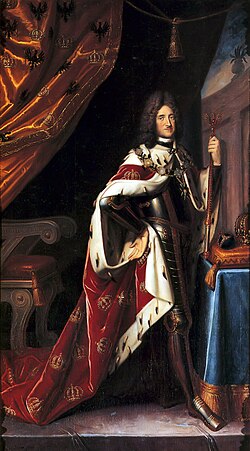
The Hohenzollern Empire rose to dominance during the 17th century, with Frederick I emerging as the first King of Prussia through political and military endeavors. The Kingdom consists of modern-day Poland, Germany, Russia, and Lithuania. As Frederick I expanded his Empire, he encountered challenges in assimilating the diverse communities under his rule. The Hohenzollerns aimed to fix this problem of cohesion by rather than inclusion but by exclusion. The Hohenzollerns promoted a national identity based on a shared ethnicity and religion, uniting their subjects while marginalizing those who could disrupt the social fabric of the Prussian Empire.
This approach is evident in Frederick I’s writings to his son, Frederick II. He emphasized maintaining a strict Christian moral code, mainly rooted in Calvinist values, to ensure the moral integrity of the Empire. In his letter, Frederick I advised, “Therefore, we true Christians must destroy the temple of Satan. It is the duty of a God-fearing ruler – rather, your duty – to repress and not to tolerate the temple of Satan, that is, mistresses, operas, comedies, redoutes, ballets, and masques, and yourself to lead no such ungodly life, which has never been tolerated in our House, and from the day of John Sigismund no such sins have flourished in the House of Brandenburg.” Frederick I links his rule to upholding Christian morality, which is essential to his dynasty’s mission of creating a national identity. It also emphasizes how the Hohenzollerns intended to use an iron fist to control the culture and religion of the Empire to shield outside influence and, in turn, promote a national sense of unity within the Prussian nation.
We can also begin to analyze how the Hohenzollern used political pragmatism and deception in regard to religious minorities, as prior to Frederick I’s political testimony at the Recess of Brandenburg, Frederick I had a contradicting statement regarding the treatment of religious minorities in his nation stating, “No compulsion or pressure shall be put on them to abandon it, as We have never thought to arrogate to Ourselves the dominion over consciences. Neither shall any person who is suspect to Our subjects be intruded in Our agencies and in places the patronage of which belongs to Us.” This apparent contradiction between his public statements and private counsel highlights Frederick I’s willingness to deceive external powers to strengthen his position and shape his Empire.
Frederick II, his son, further expanded on the concept of national unity and Prussian identity in his political testament, emphasizing that the nobles of his Kingdom must share a common identity and avoid outside influence to achieve a cohesive nation. Frederick II states, “It is also necessary to prevent noblemen from taking service abroad, to inspire them with an esprit de corps and a national spirit: this is what I have worked for, and why, in the course of the first war, I did everything possible to spread the name of ‘Prussian.’” Frederick II’s political testament underscores the importance of identity in maintaining state cohesion, so he restricted his nobles—who reflect the State and, by extension, his rulership and legacy—from serving outside Prussia.
Additionally, the Hohenzollern dynasty also emphasized unity within the nation’s class system, believing that it was the ruler’s responsibility—and by proxy, the nobles’—to improve the quality of life for the people they governed, thus earning the trust of the peasant class. Frederick II intended to build said trust by urging the nobles to remain virtuous and avoid lives of decadence and excess. Frederick II states, “Princes, sovereigns, and kings have not been given supreme authority in order to live in luxurious self-indulgence and debauchery. They have not been elevated by their fellow-men to enable them to strut about and to insult with their pride the simple-mannered, the poor, and the suffering. They have not been placed at the head of the State to keep around themselves a crowd of idle loafers whose uselessness drives them towards vice. The bad administration which may be found in monarchies springs from many different causes, but their principal cause lies in the character of the sovereign.” This avoidance of decadence by the ruling class can be seen as a preventative measure to avoid revolution and rebellion, as discontent among the lower classes could lead to fragmentation of the nation.
Habsburgs:
Like the Hohenzollerns, the Habsburgs faced significant challenges in maintaining cohesion within their Empire during the 18th century, but they approached the problem differently. While the Hohenzollerns sought to create a centralized identity based on ethnicity and religion, the Habsburgs focused on equality and non-partisanship among the diverse peoples of their Empire—whether religious, racial, or political.
The Holy Roman Empire granted each nation within the Empire to remain semi-autonomous as long as they did not impose a threat within the Empire and served the interests of the crown. The semi-autonomous nature of the nations within the Habsburg’s land, however, as it was intended, provided the ground for much corruption to flourish. Maria Theresa, the unofficial ruler of the Holy Roman Empire and direct descendant of the Habsburg dynasty, intended to fix the disunity within the Empire using a mix of political power and the legacy of her family in order to do so.
Maria Theresa coming to power during a tumultuous time in the Empire as disunity was rampant, allowing both threats from internal and external powers; Maria Theresa described this disunity in her political testimony, stating, “This constant disunity of the Ministries, in every reign, has often plunged the whole system into extreme danger of collapse, from which only Divine Providence has extricated and saved our House.” Maria Theresa attributed this disunity to the self-interest of the semi-autonomous states, which allowed them to pursue their agendas, as well as the corruption among the noble class—an issue the Hohenzollerns had also addressed. By invoking “Divine Providence,” Maria Theresa sought to unify the Empire under the crown’s symbolic, historical, and political authority, in stark contrast to Prussia’s reliance on a shared cultural and racial identity.
Maria Theresa’s solution to the Empire’s fragmentation differed from the top-down approach of the Hohenzollerns. While they centralized power, she sought to reform the State at a systemic level, mainly through changes in taxation and funding. Explaining her goals, stating, “Nevertheless, I was not to be deterred from reaching my goal here also, and consequently from limiting the domestic expenditure for the benefit of the poor taxpayers, and also from carrying through and regulating equitably the adjustment – more necessary here than anywhere – and the extension of taxation to properties formerly exempt. I hope thereby not only to consolidate the uniform system – since I wish these principles to be observed equally in all Provinces – but also to attract the blessing of God on this my salutary intention.” Through these reforms, Maria Theresa aimed to eliminate corruption and promote cohesion by standardizing taxation across provinces, all while respecting the autonomy of the individual states.
Conclusion:
The Habsburgs and the Hohenzollerns sought to maintain unity across their vast lands to advance their empires and interests. While the Habsburgs relied on political authority and historical claims, the Hohenzollerns focused on nation-building and fostering a solid national identity. Both dynasties shared the belief that solving internal issues required a top-down approach. However, the Hohenzollerns took a more totalitarian role, emphasizing nation-state building with a solid central identity, whereas the Habsburgs chose a more administrative and bureaucratic approach, relying on laws and reforms to address the complexities within their Empire. Despite these differences, both empires were driven by a desire to maintain social order and preserve peace and unity among their people.
Bibliography
Frederick II. Political Testament of Frederick II (“the Great”) (1752). Vol. 2. From Absolutism to Napoleon, 1648-1815.
Frederick II (“the Great”). “Forms of Government and the Duties of Rulers” (1777). Vol. 2. From Absolutism to Napoleon, 1648-1815.
Frederick William I. The Political Testament of Frederick William I (“the Soldier King”) (February 17, 1722). Vol. 2. From Absolutism to Napoleon, 1648-1815.
Macartney, C. A., ed. The Habsburg and Hohenzollern Dynasties in the 17th and 18th Centuries. Walker, 1970.
Maria Theresa. Political Testament (1749-50). Vol. 2. From Absolutism to Napoleon, 1648-1815.
 Trager Bos
Leave a comment